- Direct Answer
- How a Permeable Paver Driveway Rebate Works in the Bay Area
- Which Bay Area Water Providers Offer a Rebate for Permeable Pavers
- The Paperwork Problem Most Homeowners Don’t See Coming
- Permeable Paver Types That Typically Qualify for a Rebate
- Where a Permeable Paver Driveway Rebate Makes Sense, and Where It Doesn’t
- What’s the difference between permeable and pervious pavers for rebate purposes?
- Can I get a rebate for repaving only part of my driveway?
- Does a permeable driveway need special maintenance to stay rebate-eligible?
- Why do some permeable driveways stop draining after a few years?
- How much of my project does a permeable paver driveway rebate actually cover?
- What should I ask a contractor before applying for a rebate?
- Final Thoughts
Direct Answer: A permeable paver driveway rebate is offered by individual Bay Area water agencies and cities, such as Valley Water and Palo Alto, rather than one regional program, so eligibility and funding vary and should be confirmed locally before work starts.
Introduction
If you have searched for “permeable driveway rebate” or “pervious paver incentive” and found conflicting answers, you are not imagining things. Homeowners often confuse permeable pavers with the trademarked term “PICP” (permeable interlocking concrete pavement), and some assume any water-saving program from their utility automatically applies to a new driveway. It usually does not work that way. In the Bay Area, a permeable paver driveway rebate typically comes from your local water provider’s landscape or stormwater program, not from a single countywide or state agency.
This guide covers three things: how these rebate programs are actually structured across Santa Clara, San Mateo, Alameda, Contra Costa, Marin, Napa, Sonoma, and Solano counties, what tends to disqualify a project before it even starts, and which paver systems homeowners typically use when they want their driveway to count toward one of these programs.
We install permeable and standard paver driveways across the Bay Area, and the paperwork side of a permeable paver driveway rebate is often the part that trips people up more than the actual installation. If you’d rather skip the research and just find out what your address qualifies for, you can reach out to us directly and we’ll walk you through it.
How a Permeable Paver Driveway Rebate Works in the Bay Area
A permeable paver driveway rebate is almost always paid out per square foot of impervious surface removed, funded either through a stormwater management fee on your water bill or through a broader water conservation budget. Some providers run a dedicated pervious pavement rebate. Others fold permeable hardscape into a wider lawn conversion or landscape rebate program, where pavers are one allowed material among several, not the whole point of the program.
That distinction matters. A dedicated stormwater pervious pavement rebate usually cares about one thing: does water actually infiltrate through the surface instead of running off. A landscape conversion rebate usually cares about reducing irrigated turf, and permeable hardscape is allowed as a supporting element, often capped at a percentage of the total converted area rather than paid on the full driveway footprint.
Either way, nearly every program we have seen requires written pre-approval before you remove the old surface. That single detail explains most of the rebate applications that get denied.
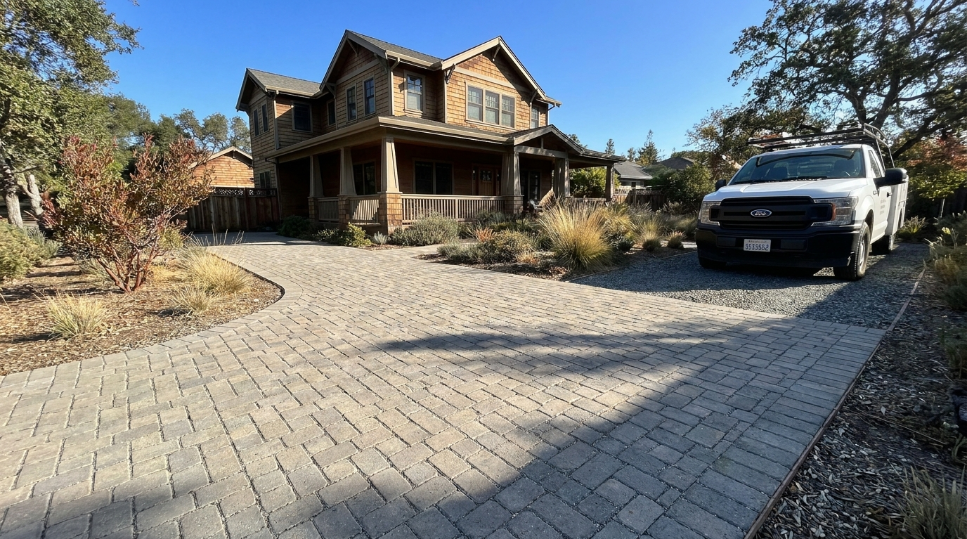
Which Bay Area Water Providers Offer a Rebate for Permeable Pavers
Coverage is uneven across the region Legacy System Pavers serves, which is part of why so many homeowners get confused shopping around for a permeable paver driveway rebate. The table below summarizes how a few well-documented providers currently structure their programs. Amounts and funding cycles change, so treat this as a starting point for your own research, not a final number.
| Water Provider / Program | General Service Area | Covers Permeable Pavers? | Typical Structure |
|---|---|---|---|
| City of Palo Alto Stormwater Rebate Program (with Valley Water) | Palo Alto, Santa Clara County | Yes, a dedicated pervious pavement rebate | Driveways, walkways, patios, and parking areas |
| Valley Water Landscape Rebate Program | Santa Clara County | Yes, as part of a turf conversion project | Permeable hardscape allowed alongside water-wise planting |
| Marin Water Cash for Grass | Marin Water service area | Partial, capped as a share of the converted area | Permeable hardscape allowed up to a set percentage of the lawn conversion |
| Sonoma-Marin Saving Water Partnership members | Sonoma and Marin counties | Varies by individual utility | Regional coalition, but each member city sets its own rules |
| Zone 7 Water Agency retailers (Livermore, Pleasanton, Dublin San Ramon) | Tri-Valley, Alameda County | Yes, as a reimbursable material | Permeable hardscape counted within a turf conversion project |
Notice what is missing from that list: a single program covering all 84 cities in the eight counties we serve. If your city or water district is not listed here, that does not mean nothing is available. It means you need to call your provider directly, because a permeable paver driveway rebate is administered locally, city by city and district by district, not through one statewide portal.
The Paperwork Problem Most Homeowners Don’t See Coming
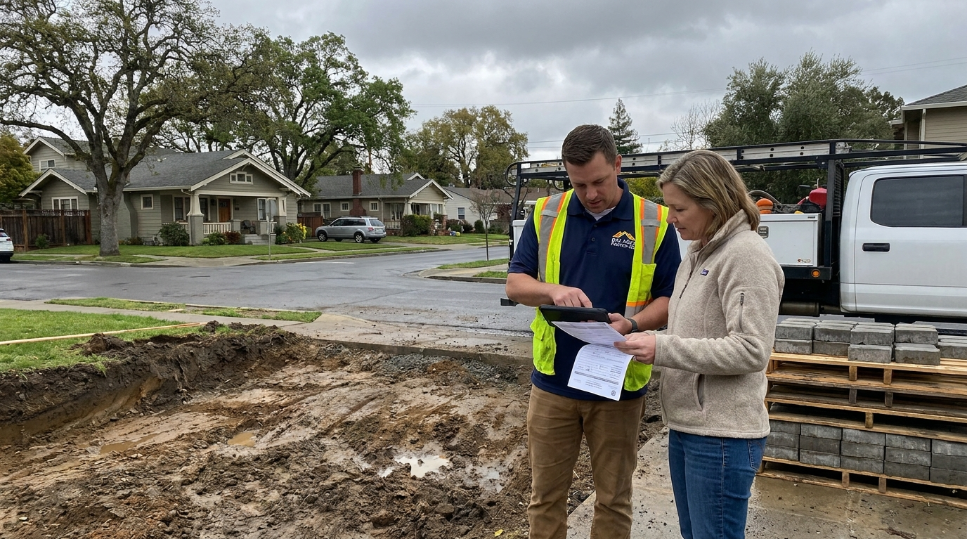
Here is the honest version most contractors will not tell you upfront. Every program we have reviewed, from Palo Alto’s pervious pavement rebate to the Tri-Valley lawn conversion rebate, requires the same sequence: apply, wait for written approval, then start work. Homeowners who get excited and tear out the old driveway first almost always lose their eligibility, no exceptions, no matter how permeable the new surface turns out to be.
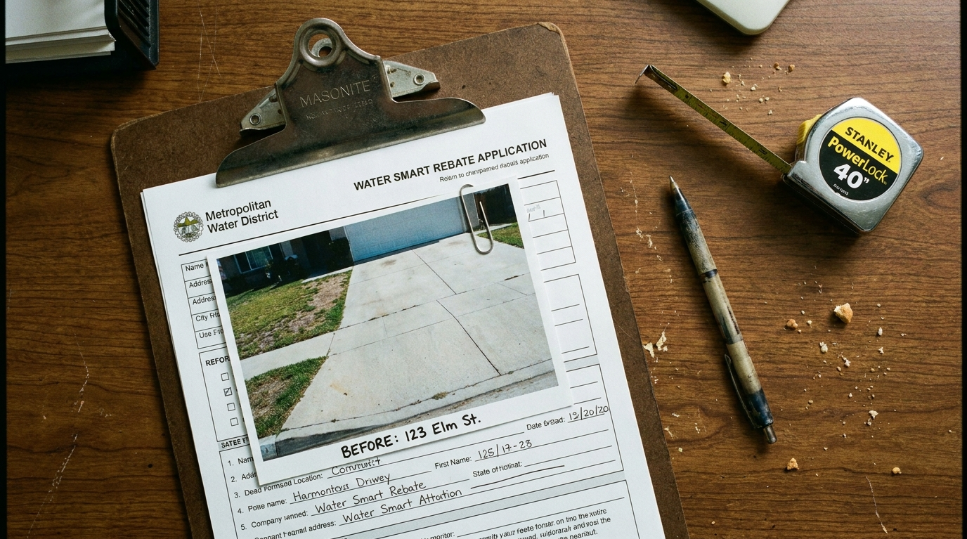
The technical reason is simple. Reviewers need before photos and a design showing infiltration area, soil type, and slope, and they cannot verify any of that once the old surface is gone. A permeable paver driveway rebate application approved after the fact is treated the same as no application at all by most water providers.
A few things reduce the risk of losing a rebate you were otherwise eligible for:
- Confirm the minimum square footage your provider requires before you scope the project, since some programs will not pay out below 100 square feet.
- Ask whether your provider requires a specific installer certification, since a few programs only accept work from a contractor trained in permeable interlocking concrete pavement installation.
- Check the funding status before you apply, since several of these programs run first-come, first-served and can pause mid-year once the budget is spent.
- Keep dated photos of the existing driveway from before any demolition, even if your provider does not explicitly ask for them yet.
Before you sign a contract, ask your paver contractor a direct question: have they handled the pre-approval paperwork for a stormwater or landscape rebate before, and can they hold off on demolition until your written approval is in hand? If you want a second set of eyes on your specific project before you apply anywhere, get in touch with our team and we can help you sequence it correctly.
Permeable Paver Types That Typically Qualify for a Rebate
Not every paver labeled “permeable” by a showroom actually qualifies once a reviewer looks at the joint detail. These are the systems that show up most often in Bay Area rebate applications:
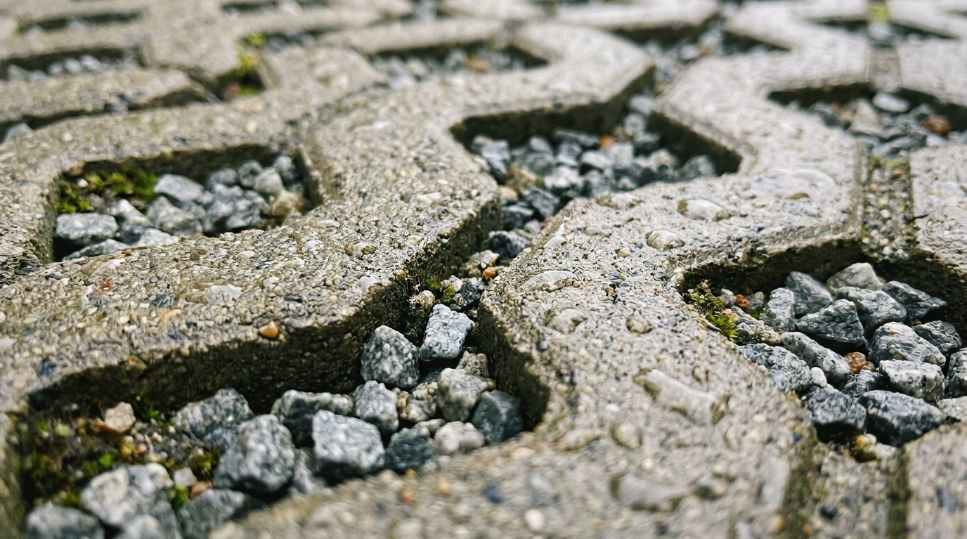
- Permeable Interlocking Concrete Pavers (PICP): The most common choice for Bay Area driveways applying for a rebate, with open joints filled with small aggregate instead of sand or mortar. The common mistake is letting a crew fill the joints with regular polymeric sand, which seals the surface and disqualifies the project on inspection.
- Pervious Concrete: A good fit for wide, flat driveway aprons where a uniform poured surface is preferred over individual units. The common mistake is applying a standard concrete sealant afterward, which closes the pore structure the rebate is meant to reward.
- Porous Asphalt: Less common for residential driveways in our service area, though it shows up on some commercial applications. The common mistake is assuming a regular asphalt crew can install it, since the open-graded mix and base layer are different from standard paving.
- Grid or Turf Pavers: Open-cell units filled with gravel or grass, often used for a secondary parking pad rather than a primary driveway. The common mistake is choosing this system for daily, heavy vehicle use, since the infill compacts and loses permeability faster under constant load than PICP does.
Because the rebate application usually asks for a system diagram, it can help to keep this comparison in mind next to your project’s actual traffic pattern, not just its look. We post close-up joint detail shots from recent installs on our Instagram if you want a visual sense of how each system actually looks once it’s finished.
Where a Permeable Paver Driveway Rebate Makes Sense, and Where It Doesn’t
A permeable paver driveway rebate tends to make the most financial and practical sense on properties with a clear runoff problem already, not just an aesthetic upgrade. A sloped driveway in Walnut Creek that sends water straight toward a garage door during winter storms, or a flat Fremont lot with standing water after heavy rain, are the kinds of situations reviewers are set up to reward. Older neighborhoods in cities like Concord and Santa Rosa, where original driveways were poured before modern drainage codes, are also common candidates.
It makes less sense in a few situations. If your soil is heavy clay without a professional underdrain design, infiltration can be too slow for the system to perform as intended. If your slope exceeds roughly 5 percent, most rebate guidelines exclude the project outright regardless of paver type. And if you are planning to sell within the next year, the several-week approval and inspection timeline may not be worth it compared to a standard driveway replacement.
Reviews from our clients across the region tend to echo the same pattern: people are generally pleased with the finished look, but the ones who mention the rebate specifically usually credit having a contractor who managed the paperwork sequence correctly from the start.
A Quick Example
A homeowner in Danville recently asked us to help with a hypothetical scenario that comes up often: a cracked, sloped concrete driveway sending runoff into the street every winter. Working through a permeable interlocking concrete paver design, checking the local provider’s pre-approval requirements before demolition, and documenting the existing slope and drainage pattern are the steps that keep a project like this eligible for a permeable paver driveway rebate from start to finish.
If you want to see how this compares to a standard driveway installation, our guide on driveway pavers explains the base preparation and material options we use across both permeable and traditional projects, and our guide on why pavers breaks down how paver systems compare to poured concrete over the long term.

Frequently Asked Questions
What’s the difference between permeable and pervious pavers for rebate purposes?
Most Bay Area programs treat the two terms as interchangeable. What actually matters to a reviewer is the joint design: open, unmortared joints qualify, sealed or mortared ones don’t, regardless of the manufacturer’s label. Use the exact term listed on your provider’s guidelines when you apply.
Can I get a rebate for repaving only part of my driveway?
Usually, yes, as long as the converted area meets your program’s minimum, often around 100 square feet, and still allows infiltration instead of sheeting water toward an untouched section. Ask your provider whether a project done in phases counts as one application or several.
Does a permeable driveway need special maintenance to stay rebate-eligible?
Some programs expect the surface to keep functioning for a set number of years, which mainly means periodic vacuuming or pressure washing of the joints. Skipping this rarely claws back a paid rebate, but it can hurt future eligibility if an inspection finds the surface clogged.
Why do some permeable driveways stop draining after a few years?
Fine sediment and debris, like leaves and tire grime, settle into the joints and compact over time. Homeowners often don’t notice until a storm leaves standing water. Routine joint cleaning, not full replacement, fixes this in most cases.
How much of my project does a permeable paver driveway rebate actually cover?
That depends on your provider’s current per-square-foot rate, any program cap, and whether your project falls under a dedicated pervious pavement rebate or a percentage within a landscape program. Confirm the current figure with your water agency directly, since it typically offsets part of the material cost, not the full project.
What should I ask a contractor before applying for a rebate?
Ask if they’ve completed a rebate-eligible job with your specific water provider, whether they’ll supply the before photos and design documentation the application needs, and whether they’ll hold off on demolition until written approval arrives. Their answers usually tell you how much of this paperwork they’ve actually handled.
Final Thoughts
A permeable paver driveway rebate is real and worth pursuing across much of the Bay Area, but it is not automatic and it is not identical from one city to the next. The programs that pay out reliably share the same pattern: apply first, document the existing surface, choose a paver system with open, unmortared joints, and confirm your provider’s current rules before anything gets torn out. If you are weighing a permeable driveway against a standard replacement and want help sorting out what your specific address qualifies for, reach out to our team and we can walk through the paperwork sequence alongside the design itself.