In This Guide
- What Do the Fire Pit Spare the Air Rules Say?
- Can You Use a Wood-Burning Fire Pit on a Spare the Air Day?
- Are Gas and Propane Fire Pits Allowed During an Alert?
- Wood vs. Gas vs. Propane: Quick Decision Guide
- The Catch With a Wood Fire Pit: Alerts Do Not Care About Your Plans
- How Do You Know If Today Is a Spare the Air Day?
- Where Each Fire Pit Type Makes Sense, and When It Does Not
- What to Ask Your Installer and Your City Before You Build
- A Hypothetical Walnut Creek Patio
- Frequently Asked Questions
- Is a gas fire pit really treated differently from a wood one on alert days?
- Can I burn a store-bought fire log in my fire pit during an alert?
- What should I do with a wood fire pit I rarely use in winter?
- Why does the Air District ban wood fires on some nights and not others?
- What affects the price of adding a fire pit to a patio?
- What should I ask before I build a fire pit?
- Before You Light the Next Fire
Direct Answer: Under the fire pit spare the air rules, you cannot burn wood, manufactured fire logs or any other solid fuel in a fire pit during an alert, while gas, propane and electric fireplaces are allowed, so confirm how your gas unit is treated.
You finish a paver patio, set up the fire pit, invite the neighbors, and then your phone buzzes with a Spare the Air Alert. The fire pit spare the air question catches a lot of Bay Area homeowners off guard, because the rule is not about how big your fire is. It is about what you burn.
The terms get mixed up fast. “Wood-burning fire pit,” “gas fire pit,” “propane fire table” and “fire log” all sound similar, but they are not treated the same way. A store-bought fire log, for example, is a manufactured log, and the Bay Area Air Quality Management District (the “Air District”) names those in its ban.
This guide covers three things: what the fire pit spare the air rules say about wood and gas, why alerts now land on more nights than they used to, and what to ask before you plan a fire pit on a new patio. It is general information, not legal advice. Planning a patio and want to talk it through? You can request a free estimate from our team.
What Do the Fire Pit Spare the Air Rules Say?
The Air District makes it illegal to burn wood in an outdoor fire pit during a Spare the Air Alert for fine particle pollution. Its alert notices list fireplaces, wood stoves, pellet stoves, outdoor fire pits and any other wood-burning devices. They also say the alert bans burning wood, manufactured fire logs or any other solid fuel, both indoors and outdoors.
The reason is health. The Air District describes wood burning as the leading source of wintertime air pollution in the Bay Area. It also links wood smoke to serious respiratory illness and a higher risk of heart attacks. Cold temperatures and calm winds hold smoke close to the ground, so the smoke from your patio can end up in your neighbors’ yards.
Exemptions are narrow. They cover homes where a wood-burning device is the only source of heat, and that device must be EPA-certified or a registered pellet-fueled unit. A fire pit used for evenings outside is not what that exemption describes.
Enforcement of the fire pit spare the air rules works in steps. First-time violators are encouraged to take a wood smoke awareness course, and repeat violations lead to tickets that increase. We are not listing amounts here, because the Air District can change them. Also, the ban is not limited to winter. The Air District has said wood burning is banned any time of year when an alert is called.
Can You Use a Wood-Burning Fire Pit on a Spare the Air Day?
No. A wood-burning fire pit is one of the devices the Air District names in its ban, so using it on an alert day is a fire pit spare the air violation. Dry seasoned wood does not change that, and neither does a small fire.
The fire pit spare the air rules now apply on more nights, because alerts are showing up more often. On October 1, 2025, the Air District lowered the forecast trigger for an alert from 35 to 25 micrograms of fine particles per cubic meter. A lower trigger means more alert days. The Air District has estimated roughly 19 to 41 alerts a year under the new level, compared with a historical average of about 15.
You can see the pattern in recent winters. The first alerts of last season fell on the day before Thanksgiving and on Thanksgiving Day itself. Another covered New Year’s Day. Those are exactly the evenings when people want a fire going.
Are Gas and Propane Fire Pits Allowed During an Alert?
The Air District says natural gas, propane and electric fireplaces are allowed during a Spare the Air Alert. That sentence is about fireplaces, not fire pits, so read it with care.
A gas or propane fire pit burns no wood, so the wood-burning ban does not describe it. That is the natural reading. But the District’s alert notices do not spell out gas fire pits by name, and the fire pit spare the air rules for gas units are less detailed than the rules for wood. Before you count on a gas unit for alert nights, check the rule text on the Air District’s website and ask what your city allows.
Cities and counties can have their own fire pit rules on top of the Air District’s. Distances from structures, fuel type and fire-season restrictions vary, and we have not researched each city here. Treat your city as a second checkpoint.
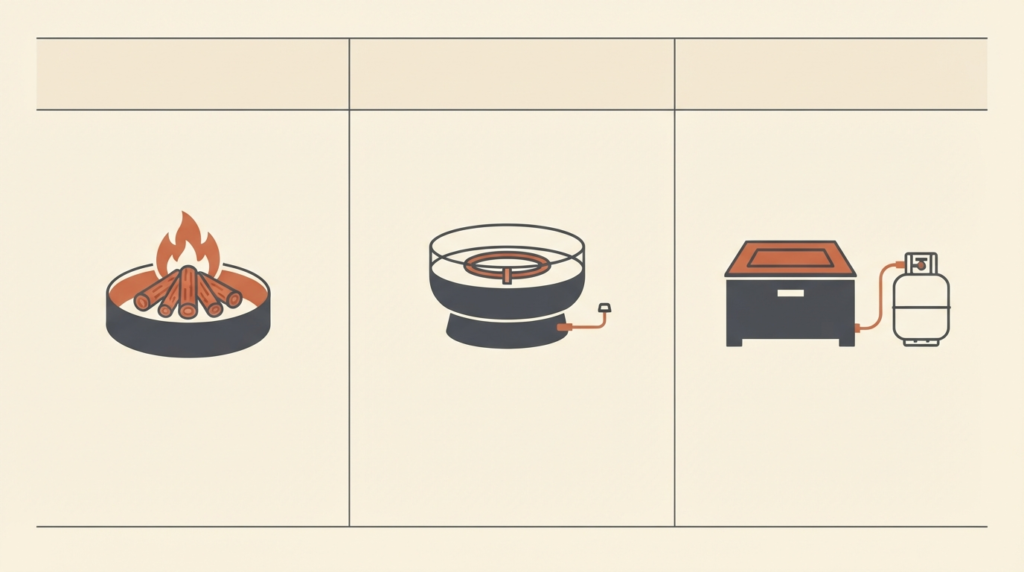
Wood vs. Gas vs. Propane: Quick Decision Guide
The table below lines up the common fuel types against what the Air District says about alert days. It does not rank them or promise anything about city rules.
| Fire pit type | Allowed during a Spare the Air Alert? | Watch-out | Question to ask your installer or city |
|---|---|---|---|
| Wood-burning | No. Outdoor fire pits and other wood-burning devices are named in the Air District’s ban. | Your patio sits idle on every alert night, and alerts can be called up to three days ahead. | How often will I realistically use this, and am I fine with dark nights on alert days? |
| Manufactured fire log in a fire pit | No. The ban covers manufactured fire logs and any other solid fuel. | A “cleaner” log is still a solid fuel in the Air District’s wording. | Does my city have separate limits on what can burn in a fire pit? |
| Natural gas | The Air District allows natural gas fireplaces. A gas fire pit burns no wood, but the notices do not name it, so confirm. | Needs a gas line, which means planning the route before pavers go down. | Who runs the gas line, and does my city require a permit? |
| Propane | The Air District allows propane fireplaces. A propane fire pit burns no wood, but the notices do not name it, so confirm. | Tank placement and storage need a plan, and your city may set its own limits. | Where can the tank sit, and what clearances does my city require? |
The Catch With a Wood Fire Pit: Alerts Do Not Care About Your Plans
The biggest downside of a wood fire pit under the fire pit spare the air rules is that the alert can cancel your evening. Alerts follow cold, calm nights, because low temperatures and light winds trap smoke near homes. Those are the same nights you want a fire.
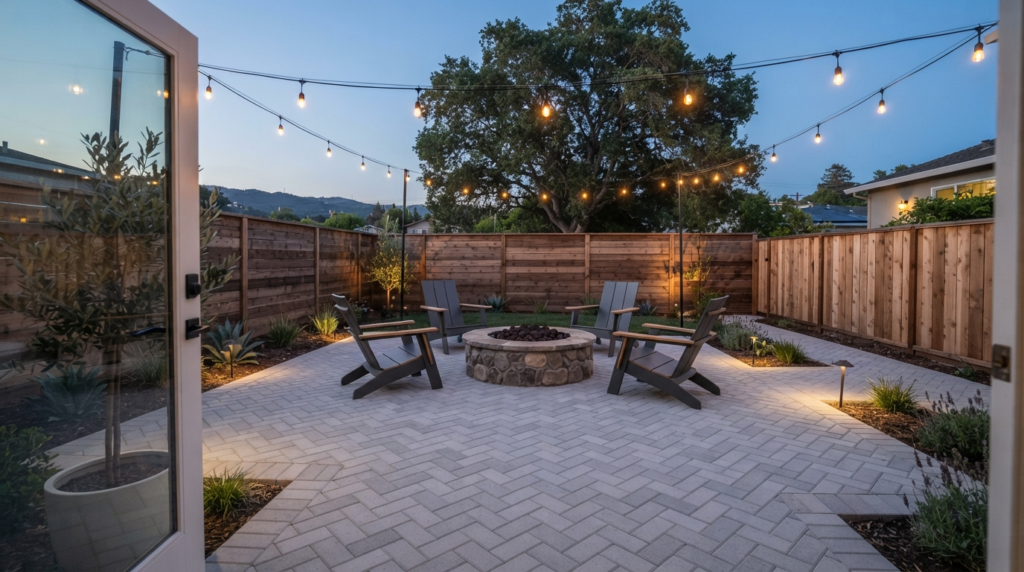
That sets up a mismatch. You design a patio around a gathering spot, then find it dark on the coldest weekends. A wood fire pit makes sense if you can live with that. If you cannot, think about it before the pavers go in.
Here is how to soften the problem:
- Check early. Look at the alert status when you plan the night, and again that afternoon.
- Do not swap fuels to dodge the rule. Dry wood and manufactured logs are both covered by the ban.
- Plan a no-flame version of the evening. Blankets, string lights and a good seating layout keep a patio useful on alert nights.
- Decide on fuel before you build. If you expect to use the pit often in winter, raise a gas option during design. Routing a gas line is usually easier to plan before the pavers are set than to cut in later.
One question to ask any contractor: “If I want to use this fire pit on any chilly night, which fuel makes sense, and what does my city require for it?”
How Do You Know If Today Is a Spare the Air Day? Five Checks Before You Light
You can find out through the Air District’s channels in a minute or two. The Air District says you can download the Spare the Air app for iPhone or Android, register for email alerts at sparetheair.org, or call 1-800-HELP-AIR. Text alerts are also offered.
Run through these five checks before every fire, because the fire pit spare the air rules apply the moment an alert is called:
- Check today’s status. Use the app or the Spare the Air website, not a neighbor’s guess.
- Look ahead. The Air District may call an alert up to three days in advance, so a weekend plan can change midweek.
- Know your fuel. Wood, manufactured logs and other solid fuels are covered. Do not assume a “clean-burning” label gets you out of it.
- Confirm your city’s rules. Your city may have limits that the Air District does not.
- Have a no-fire plan. If an alert comes, you want an evening that still works.
Want a patio plan that works with these realities? Our guide on patio pavers explains how we think through layout, drainage and gathering spaces with you.
Where Each Fire Pit Type Makes Sense, and When It Does Not
Under the fire pit spare the air rules, a wood fire pit fits the household that lights a fire a handful of times a year and accepts a dark night when an alert hits. Picture a Napa backyard where the family lights up on a few fall weekends. If one of those weekends gets cancelled, nobody minds much.
A gas or propane fire pit fits the household that wants a fire most weekends from November to February. Think of a paver patio in Walnut Creek where the family hosts on cold evenings. Frequent use is where fuel choice matters most.
A wood fire pit is not the best choice when:
- You expect to use it often in winter, when alerts are most likely.
- Your patio is small and structures sit close by, and you do not yet know your city’s distance rules.
- Your city restricts or prohibits wood fires in fire pits.
A gas or propane fire pit is not the best choice when you cannot get a gas line or tank placement that your city allows, or when you want the crackle and smell of real wood and accept the trade-offs. Wood gives you atmosphere. Gas gives you more nights of use. Pick the one that matches how you live.
What to Ask Your Installer and Your City Before You Build
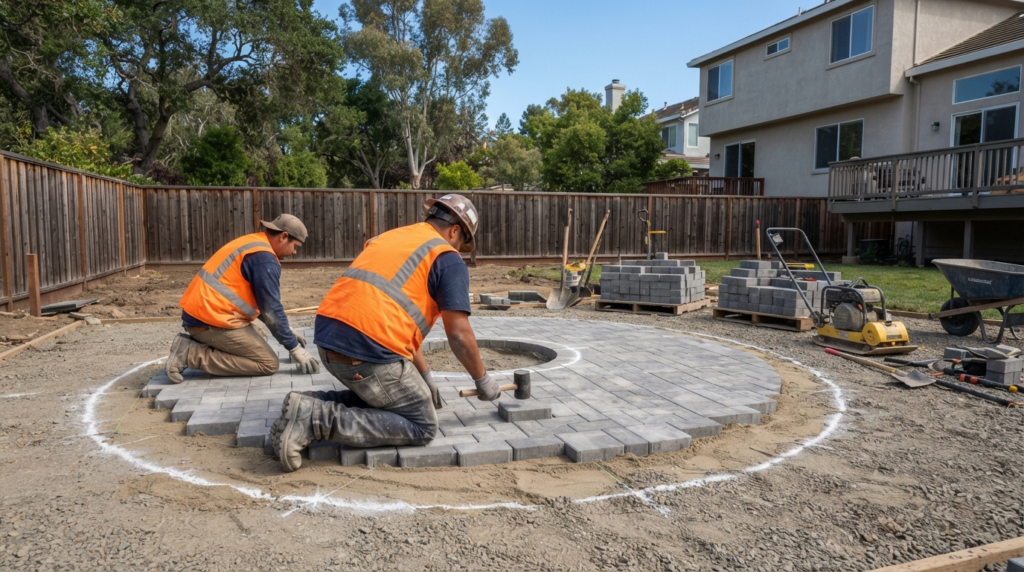
Ask these questions before you commit to a design, because the fire pit spare the air rules shape the patio itself. Fire pits often sit beside outdoor kitchens, and our outdoor kitchens page shows how we plan those spaces together.
- Which fuel fits how often I will really use this?
- Who handles the gas line or tank setup, and are they properly licensed for it?
- Does my city require a permit for a fire pit or a gas line?
- How far must the fire pit sit from the house, fences and overhead structures?
- What materials around the pit can handle heat?
- What is the plan for nights when an alert is in effect?
Bring these to your city’s planning or building office as well. That is the only way to get rules specific to your address. For more homeowner questions, our FAQ page covers how our projects work.
A Hypothetical Walnut Creek Patio
This example is an illustration, not a real client. Imagine a family in Walnut Creek planning a new paver patio. They love the idea of a wood fire pit for holiday gatherings. During planning, they learn that alerts have fallen on Thanksgiving week and New Year’s Day in recent winters, and that the trigger is now lower.
They decide the pit will be used most on cold weekends. So they ask their installer and their city about a gas option, and they reserve space in the patio layout for it. If they had planned only for wood, they would likely face the dark evenings the fire pit spare the air rules create. Because they asked early, their layout works either way.
That is the kind of conversation we like to have before the first paver goes down. Customers who share reviews of our work on Google and Yelp often mention that we explain their options and set clear expectations. If you want that kind of planning for your patio, reach out to us for a free estimate.
Frequently Asked Questions
Is a gas fire pit really treated differently from a wood one on alert days?
The Air District bans wood-burning devices, including outdoor fire pits, during an alert, and says natural gas, propane and electric fireplaces are allowed. A gas fire pit burns no wood, but the notices do not name gas fire pits, so confirm with the Air District and your city.
Can I burn a store-bought fire log in my fire pit during an alert?
No. The Air District’s alert notices ban burning wood, manufactured fire logs or any other solid fuel, indoors and outdoors. A store-bought fire log is a manufactured log, so it is covered.
What should I do with a wood fire pit I rarely use in winter?
Keep it covered and clear of debris, and remove old ash before the next use. Check the surrounding pavers for cracks or shifting. A pit you light only a few times a year is still bound by the alert ban.
Why does the Air District ban wood fires on some nights and not others?
Cold temperatures and calm winds trap wood smoke near homes, so the Air District calls an alert when forecast fine particles pass its trigger level. It lowered that level from 35 to 25 micrograms per cubic meter in October 2025.
What affects the price of adding a fire pit to a patio?
The fuel type, whether a gas line is needed, the size of the pit, the materials around it, site access and any city permit all shape the price. A site visit and a written estimate is the way to get an accurate number for your yard.
What should I ask before I build a fire pit?
Ask which fuel fits how often you will use it, who handles any gas line, and whether your city needs a permit. Also ask about distance from structures, heat-resistant materials and the plan for alert nights.
Before You Light the Next Fire
The fire pit spare the air rules come down to fuel and timing. Wood, manufactured logs and other solid fuels are off the table on alert days. Gas, propane and electric fireplaces are allowed, and a gas fire pit burns no wood, but confirm the details with the Air District and your city before you rely on one.
Alerts are more frequent than they used to be, so plan your patio for the nights you actually want to use it. If you are building or updating a patio and want to talk fuel, layout and materials, contact Legacy System Pavers for a free estimate. You can also see our recent work on Instagram and Facebook, or read what customers say on Thumbtack.
Legacy System Pavers
2135 Lupine Rd, Hercules, CA 94547
+1 925-666-3008 | info@legacysystempavers.com
Mon to Sat 9:00 AM to 5:00 PM, Sun closed