If you have ever stood in your driveway wondering why it looks flat and forgettable compared to your neighbor’s, the answer usually comes down to one thing: pattern choice.
Finding the driveway paver patterns Bay Area homes best suit is not just about looks. It is about durability, drainage, and long-term value in a region known for hillside lots, clay soil, and a mix of architectural styles from Mediterranean to modern farmhouse.
In this guide, we break down the driveway paver patterns Bay Area homes best support, how to choose one for your property, and the mistakes to avoid before you ever mix a bag of polymeric sand. Keep reading to see exactly how the right layout can transform a plain slab into a standout entrance.
What Are Driveway Paver Patterns and Why Do They Matter?
Choosing the right layout among the driveway paver patterns Bay Area homes best rely on starts with understanding your daily traffic and architectural style, which the sections below cover in detail.
A paver pattern is simply the layout in which individual pavers are arranged. It is one of the biggest factors separating a generic driveway from one that feels custom-built.
When homeowners search for driveway paver patterns Bay Area homes best options, they are usually comparing three things: visual appeal, structural performance under vehicle weight, and how well the pattern hides wear over time.
Bay Area properties present unique challenges. Many homes sit on sloped lots in cities like Hercules, Berkeley, and Oakland, which means water runoff and interlocking strength matter as much as style.
A poorly chosen pattern can shift under the weight of daily traffic. A well-engineered one, installed correctly by a licensed team such as Legacy System Pavers, distributes load evenly and resists cracking for decades.
This is exactly why homeowners take the time to research driveway paver patterns Bay Area homes best support before signing a contract. According to installation guidelines published by the Interlocking Concrete Pavement Institute, proper base compaction is the single most important factor in long-term paver performance, regardless of pattern.
Herringbone: The Strongest Choice for Daily Traffic
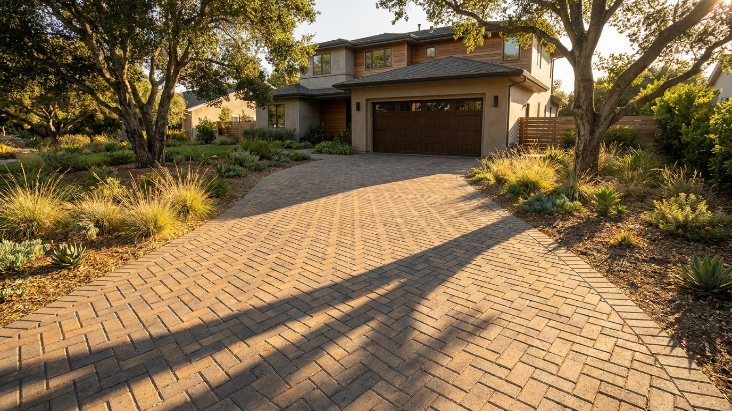
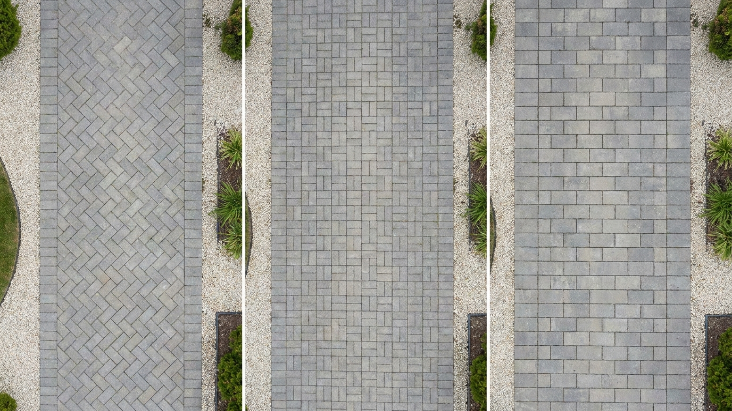
Herringbone is consistently ranked among the driveway paver patterns Bay Area homes best rely on for heavy vehicle use.
The interlocking 45 or 90 degree layout locks pavers together on all four sides, which means there is no straight running joint for tires to gradually work loose. This makes herringbone a favorite for long driveways serving multiple cars, RVs, or frequent guest parking.
Basketweave: A Timeless Look for Classic Facades
For homeowners with traditional or Mediterranean-style homes, basketweave is often cited as one of the driveway paver patterns Bay Area homes best complement with brick or stone accents.
The pattern pairs two or three pavers into a woven square, creating a formal, symmetrical rhythm that reads as elegant without feeling overly busy.
Running Bond: Budget-Friendly and Easy to Maintain
Running bond, sometimes called stack bond when offset less dramatically, is a simple linear layout that tends to cost less in labor because it is faster to install.
It remains one of the more forgiving driveway paver patterns Bay Area homes best use for smaller driveways, walkways transitioning from a walkway paver installation, or budget-conscious renovations that still need a polished finish.
How to Choose the Right Pattern for Your Property
Narrowing down the driveway paver patterns Bay Area homes best support usually comes down to a short conversation about lifestyle and budget.
Picking from the many driveway paver patterns Bay Area homes best fit starts with three questions: how much weight will the driveway carry, what architectural style are you working with, and how much slope or drainage complexity exists on the lot.
- Assess traffic load. Herringbone or basketweave patterns handle heavier, more frequent vehicle traffic better than simple running bond layouts.
- Match your home’s architecture. Modern homes often lean toward large-format running bond or linear layouts, while traditional homes benefit from herringbone or basketweave detailing.
- Plan for drainage. A licensed installer can grade the base correctly so water moves away from the foundation regardless of which pattern you choose.
Homeowners comparing options often ask our team at Legacy System Pavers to walk the property in person, since photos rarely capture slope and soil conditions accurately.
An in-person visit is usually the fastest way to narrow down the driveway paver patterns Bay Area homes best fit for that specific lot. You can browse real installations in our project gallery or read about why pavers outperform poured concrete over time.
Step-by-Step: How Professionals Install These Patterns
Understanding the installation process helps explain why the driveway paver patterns Bay Area homes best trust are rarely a DIY weekend project, and why hiring a licensed crew pays off long after the last paver is set.
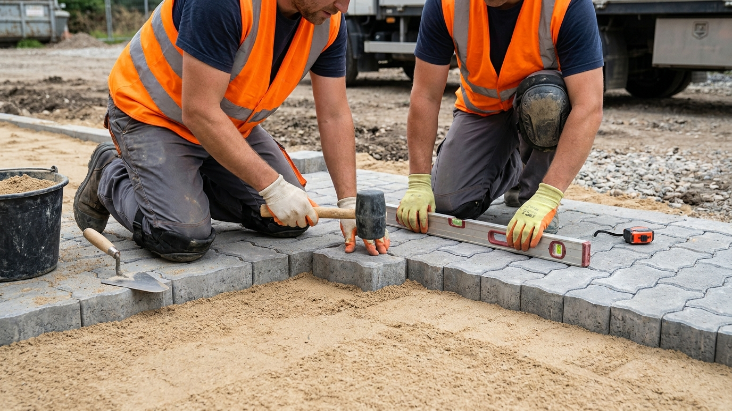
- Excavation and base prep. Crews remove several inches of soil and compact a crushed aggregate base, which is critical on the clay-heavy soils common across the East Bay.
- Bedding sand layer. A leveled sand bed provides the flat surface pavers need to sit correctly within the chosen pattern.
- Paver placement. Installers lay pavers according to the selected design, whether herringbone, basketweave, or running bond, checking alignment every few rows.
- Cutting edge pieces. Border and edge pavers are cut to fit tightly against garage openings, walkways, or landscape beds.
- Joint sand and compaction. Polymeric sand is swept into the joints and a plate compactor locks everything into place, which is what gives interlocking patterns their long-term strength.
Many clients pair a new driveway with complementary upgrades, such as outdoor lighting along the border or a matching retaining wall for sloped front yards.
These small additions often highlight the driveway paver patterns Bay Area homes best showcase even after the sun goes down.
Practical Tips and Real Examples from Bay Area Homes
Small design decisions can make a big difference. This is why our crew always shares a few tried-and-true tips before installing any of the driveway paver patterns Bay Area homes best appreciate.
On these jobs, once we start laying out the driveway paver patterns Bay Area homes best appreciate, we usually recommend a border course in a contrasting color to frame the main field pattern.
This small detail makes a herringbone or basketweave layout look intentional rather than accidental. It also reinforces the driveway’s edges against shifting, a technique that separates the driveway paver patterns Bay Area homes best showcase from an average, big-box installation.
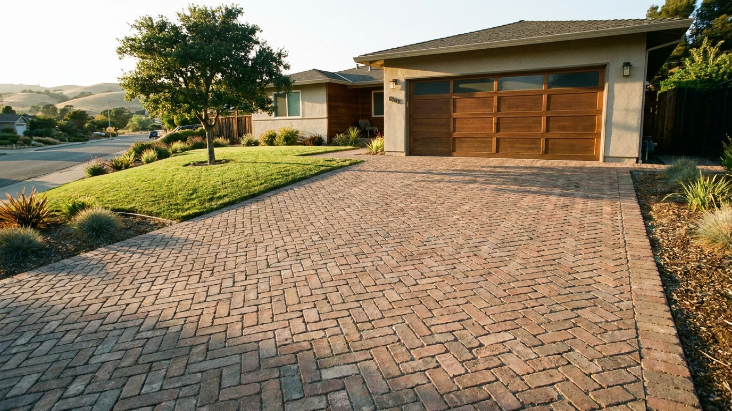
One recent project in Hercules involved a family replacing a cracked concrete slab with a herringbone layout in a warm charcoal blend. The homeowners had struggled with drainage pooling near the garage for years.
By regrading the base and selecting one of the more durable driveway paver patterns Bay Area homes best support for water flow, our team eliminated the pooling entirely while giving the entrance a noticeably more upscale look.
Another case study from a hillside property in Berkeley paired a running bond driveway with a new set of patio pavers out back, creating a cohesive hardscape theme from the street to the backyard.
This is one more example of how the driveway paver patterns Bay Area homes best pair with existing outdoor living spaces. Clients regularly mention this kind of continuity in reviews on our testimonials page, where several describe the process as smooth from consultation to final walkthrough.
Common Mistakes to Avoid
Even with the right materials, choosing among the driveway paver patterns Bay Area homes best offer can go wrong if a few basics are skipped. Below are the mistakes that most often keep a driveway from reaching its full potential.
- Skipping proper base compaction. This is the single biggest cause of shifting, sinking, and cracked joints within the first two years.
- Ignoring slope and drainage. Water that is not directed away from the home can undermine even a beautifully laid pattern.
- Choosing pattern before layout. Measuring the driveway’s actual dimensions first helps avoid awkward cuts at the edges.
- Hiring unlicensed labor. Always confirm licensing, since a poor installation can void material warranties. Legacy System Pavers operates under License #1127266 and stands behind every project.
- Overlooking maintenance. Even the strongest driveway paver patterns Bay Area homes best install still need periodic resanding and sealing to stay looking new. The National Association of Landscape Professionals recommends resanding paver joints every two to three years to prevent weed growth and shifting.
Popular Pattern Comparison
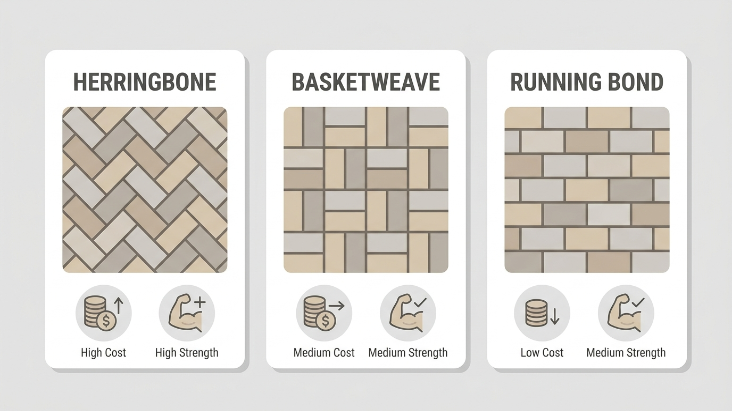
The table below summarizes how the driveway paver patterns Bay Area homes best rely on stack up against each other in terms of cost and performance.
| Pattern | Best For | Relative Cost | Strength Rating |
|---|---|---|---|
| Herringbone | Heavy daily traffic, RVs | Higher | Excellent |
| Basketweave | Traditional facades | Medium | Very Good |
| Running Bond | Budget-friendly projects | Lower | Good |
Frequently Asked Questions
What are the most popular driveway paver patterns for Bay Area homes?
Herringbone, basketweave, and running bond are the three most requested driveway paver patterns Bay Area homes best support, each suited to different traffic levels and architectural styles.
How much does a paver driveway cost in the Bay Area?
Costs vary based on square footage, pattern complexity, and site prep needs. Herringbone and basketweave typically cost more in labor than a simple running bond layout.
Do paver patterns affect driveway durability?
Yes. Interlocking patterns like herringbone distribute vehicle weight more evenly than linear layouts, which generally extends the driveway’s lifespan.
Can I mix two paver patterns in one driveway?
Many homeowners combine a herringbone field with a running bond or soldier-course border, a look our team can help design during a consultation, since some of the driveway paver patterns Bay Area homes best love actually blend two layouts into one.
How long does a paver driveway installation take?
Most residential projects take three to seven days depending on square footage, drainage work, and the complexity of the chosen pattern.
Final Thoughts
Choosing among the driveway paver patterns Bay Area homes best support does not have to be overwhelming once you understand how traffic load, architectural style, and drainage all factor into the decision.
Whether you lean toward the interlocking strength of herringbone, the classic elegance of basketweave, or the budget-friendly simplicity of running bond, working with an experienced, licensed installer makes the difference between a driveway that lasts decades and one that needs repairs within a few years. In short, the driveway paver patterns Bay Area homes best embrace are the ones matched carefully to traffic, style, and soil conditions.
Ready to upgrade your entrance with one of the driveway paver patterns Bay Area homes best deserve? Contact Legacy System Pavers today for a free consultation, or explore our full range of hardscape services to plan a complete outdoor transformation.
Legacy System Pavers | Hercules, CA 94547 | +1 925-666-3008 | info@legacysystempavers.com | Mon–Sat: 9am–5pm | License #1127266