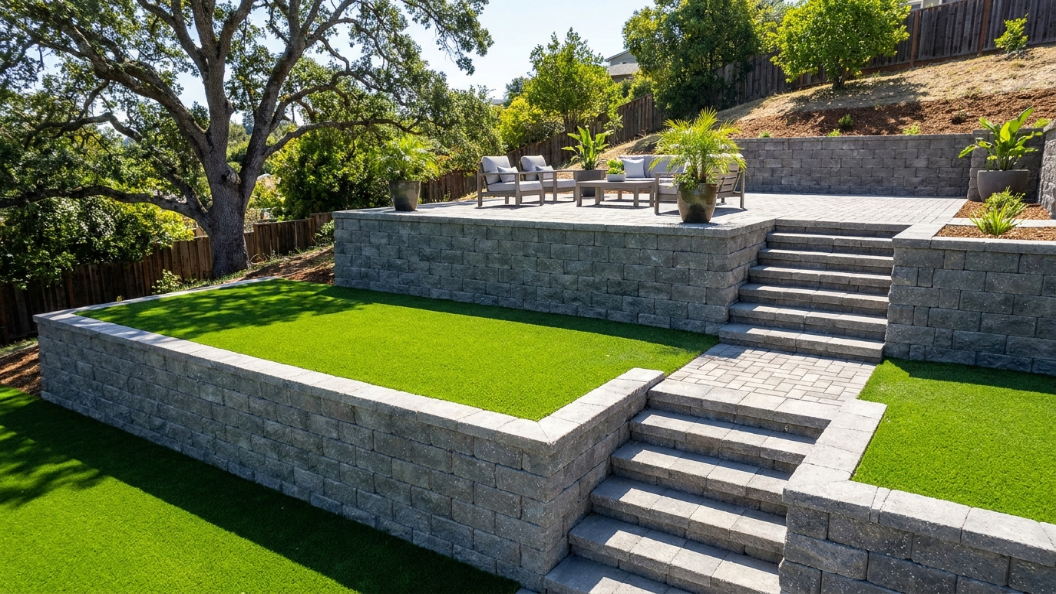
Are you struggling with a hillside property that feels unusable, unsafe, or just plain wasted? You are not alone. Nearly 60 percent of residential lots across Contra Costa, Alameda, and Marin counties sit on some form of slope, and most homeowners have no idea how much potential is hiding in that uneven terrain. The good news is that retaining walls transform sloped Bay Area yard spaces from frustrating liabilities into beautiful, functional outdoor extensions of your home. Whether you want a terraced garden, a flat patio area for entertaining, or simply need to stop soil from sliding toward your foundation, a well-designed retaining wall is the answer.
In this comprehensive guide, you will learn exactly how retaining walls work, what materials and styles suit the Bay Area climate, how much you should budget, and what mistakes to avoid. We will also share real stories from homeowners who partnered with Legacy System Pavers to reclaim their yards. Keep reading to discover why this single investment can boost your property value by thousands of dollars.
What Are Retaining Walls and Why Do Bay Area Homeowners Need Them?
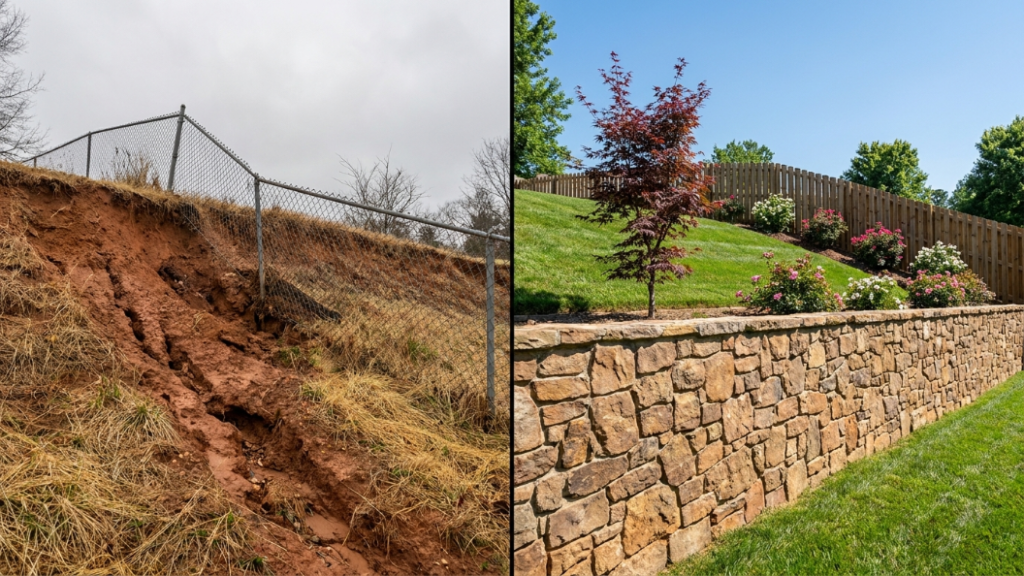
A retaining wall is a structural feature designed to hold back soil and create level surfaces on properties that slope or shift. In the Bay Area, where the natural terrain is defined by hills, ridges, and clay-heavy soils, these structures are not just decorative — they are essential for safety and usability. When retaining walls transform sloped Bay Area yard landscapes, they do so by redistributing earth pressure, preventing erosion, and opening up space that was previously inaccessible.
The geological conditions in cities like Hercules, El Cerrito, Richmond, and Walnut Creek make slopes especially prone to seasonal movement. Winter rains saturate expansive clay soils, causing them to swell and shift. Without proper structural support, this movement leads to erosion, foundation damage, and even landslides. A professionally engineered retaining wall addresses all of these concerns while giving you usable square footage you never thought possible.
How Retaining Walls Work: The Engineering Behind the Beauty
At their core, retaining walls resist the lateral pressure of soil. They achieve this through a combination of mass, structural reinforcement, and proper drainage. Gravity walls rely on sheer weight — typically stacked stone or concrete blocks — to hold earth in place. Cantilevered walls use a reinforced concrete footing and stem to leverage the weight of the soil itself as a stabilizing force. For taller applications, anchored walls incorporate tiebacks or cables drilled into the hillside.
Every time retaining walls transform sloped Bay Area yard areas, the success depends on three critical engineering factors: drainage behind the wall, a stable footing below it, and the right materials to handle local soil conditions. That is why hiring a licensed contractor familiar with Bay Area geology is not optional — it is necessary. Legacy System Pavers, License #1127266, brings years of local experience to every retaining wall project, ensuring the engineering matches the terrain.
7 Powerful Ways Retaining Walls Transform Sloped Bay Area Yard Spaces
Understanding the benefits helps you see why so many homeowners make this investment. Here are seven specific ways retaining walls transform sloped Bay Area yard properties.
1. Creating Usable Flat Spaces for Patios and Entertainment Areas
The most immediate benefit is reclaiming flat ground. A tiered retaining wall system can carve out level platforms perfect for a patio with pavers, an outdoor dining setup, or even a fire pit lounge. Homeowners in hilly neighborhoods like those in Martinez and Pinole often gain hundreds of square feet of living space they never had before.
2. Preventing Soil Erosion and Protecting Your Foundation
Bay Area winters bring intense rain events that wash away exposed hillside soil. Over time, this erosion can undermine your home’s foundation, damage retaining structures on neighboring properties, and destroy landscaping. When retaining walls transform sloped Bay Area yard soil into terraced, controlled levels, they channel water safely through integrated drainage systems, protecting your most valuable asset — your home.
3. Boosting Property Value by Up to 15 Percent
According to data from the National Association of Realtors, well-executed hardscaping projects like retaining walls deliver a return on investment between 100 and 200 percent. In competitive Bay Area real estate markets, a beautifully terraced yard with stone retaining walls can increase your home’s appraised value significantly. Buyers see a finished, functional outdoor space and are willing to pay a premium for it.
4. Adding Visual Drama and Curb Appeal
A sloped yard with bare dirt or struggling groundcover does nothing for your home’s appearance. Replace that slope with natural stone or textured concrete block walls, add integrated outdoor lighting along the tiers, and suddenly your property stands out on the entire block. Retaining walls transform sloped Bay Area yard aesthetics from neglected to magazine-worthy.
5. Enabling Terraced Gardens and Sustainable Landscaping
Gardening on a steep slope is nearly impossible — water runs off before it soaks in, soil nutrients wash downhill, and planting beds shift. Terraced retaining walls create level planting zones with proper soil depth and drainage. Many Bay Area homeowners combine retaining walls with turf installation on the flat tiers, creating low-maintenance green spaces that stay beautiful year-round.
6. Managing Water Runoff and Drainage Issues
Poor drainage is the number one cause of retaining wall failure and property damage on sloped lots. A properly designed wall incorporates French drains, weep holes, and gravel backfill to manage water pressure. This is especially critical in Bay Area microclimates where fog drip and sudden storms can dump significant moisture on hillsides. The way retaining walls transform sloped Bay Area yard drainage patterns is one of the most underappreciated benefits of the investment.
7. Building Dedicated Zones for Pools, Kitchens, and Fire Features
Imagine carving a flat terrace into your hillside for a pool deck with pavers or an outdoor kitchen. These dream features require level ground, and retaining walls provide exactly that. Homeowners who thought their sloped lots could never support a pool or cooking area are often surprised to learn that retaining walls transform sloped Bay Area yard limitations into premium outdoor living opportunities.
Best Retaining Wall Materials for the Bay Area Climate
Choosing the right material affects durability, aesthetics, cost, and maintenance. Here is how the most popular options compare for Bay Area conditions.
| Material | Durability | Cost per Linear Ft | Best For | Maintenance |
|---|---|---|---|---|
| Concrete Block (CMU/Segmental) | 50+ years | $25–$45 | Structural walls, tall applications | Very Low |
| Natural Stone | 75+ years | $40–$75 | High-end aesthetics, garden terraces | Low |
| Poured Concrete | 50+ years | $30–$60 | Engineered walls, modern designs | Very Low |
| Timber/Railroad Ties | 10–20 years | $15–$30 | Short walls, garden borders | High |
| Gabion (Wire Baskets with Rock) | 30+ years | $20–$40 | Industrial look, excellent drainage | Low |
For most Bay Area projects, concrete block and natural stone are the top choices. They handle the region’s seismic activity, clay soils, and wet winters far better than timber. When retaining walls transform sloped Bay Area yard terrain, the material needs to last decades without cracking, shifting, or rotting.
Natural stone walls blend beautifully with the Bay Area’s oak-studded hillsides and Mediterranean-style homes. Concrete block is more cost-effective for larger structural walls and can be faced with stone veneer for a premium look at a lower price point. At Legacy System Pavers, we help clients choose the material that balances their aesthetic vision, structural needs, and budget.
Step-by-Step: How Retaining Walls Transform Sloped Bay Area Yard Properties from Start to Finish
Understanding the process helps you plan timelines, budgets, and expectations. Here is how a professional retaining wall project unfolds.
Step 1: Site Assessment and Soil Analysis
Every project begins with a thorough evaluation of the slope grade, soil composition, drainage patterns, and any existing structures. In many Bay Area cities, a geotechnical report is required for walls over four feet. This step determines the wall type, footing depth, and drainage design needed.
Step 2: Permits and Engineering Plans
Most jurisdictions in Contra Costa and Alameda counties require a building permit for retaining walls exceeding 30 inches in height. Engineered drawings must show footing dimensions, reinforcement schedules, drainage plans, and surcharge loads. Your contractor should handle this process — Legacy System Pavers manages permitting for every project we build.
Step 3: Excavation and Footing Preparation
The crew excavates the hillside to create space for the wall footing and gravel base. This step is critical — a footing that is too shallow or sits on unstable soil will cause the wall to fail. In Bay Area clay soils, footings often need to extend below the expansive soil layer.
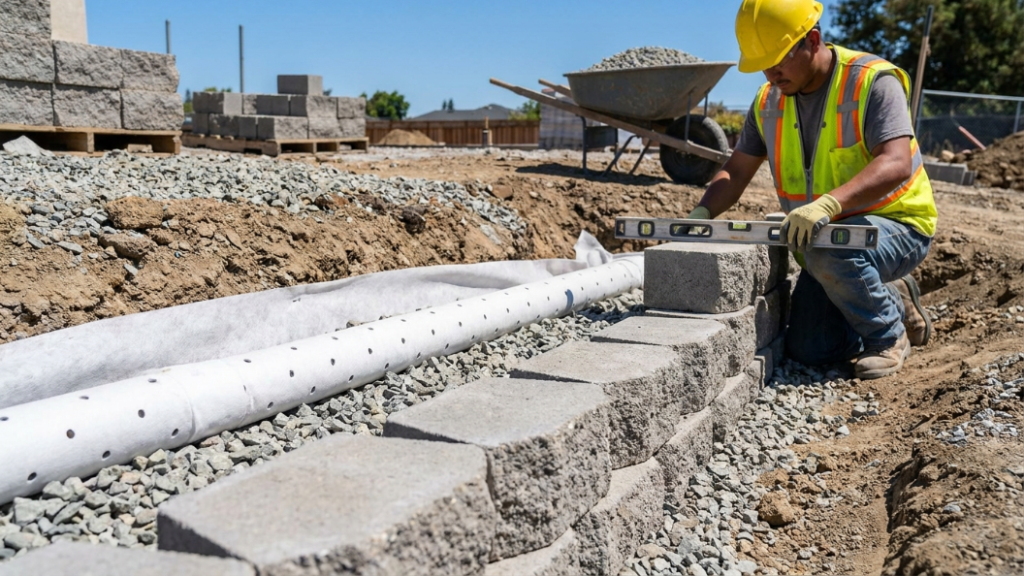
Step 4: Drainage System Installation
Before any blocks or stones go up, a drainage system is installed behind the wall location. This typically includes perforated pipe wrapped in filter fabric, surrounded by clean gravel. Proper drainage is the single most important factor when retaining walls transform sloped Bay Area yard conditions successfully.
Step 5: Wall Construction and Backfill
With the footing cured and drainage in place, the wall is built course by course. Each layer is leveled, set back slightly for batter (lean into the hill), and backfilled with gravel as it rises. For reinforced walls, geogrid layers are placed at specified intervals to tie the wall into the hillside.
Step 6: Capping, Finishing, and Landscaping
The final course receives cap stones for a polished look. The area behind and in front of the wall is graded, topsoil is added, and landscaping is installed. Many clients add walkway pavers to connect the new terraced levels or install a pergola on one of the flat platforms.
How Much Do Retaining Walls Cost in the Bay Area?
Cost is always a top concern, and the Bay Area’s higher labor and material costs mean you should budget accordingly. Here are typical ranges for 2025–2026.
| Wall Height | Material | Cost per Linear Foot (Installed) |
|---|---|---|
| Under 3 feet | Concrete Block | $30–$50 |
| Under 3 feet | Natural Stone | $50–$85 |
| 3–6 feet | Concrete Block (Engineered) | $50–$90 |
| 3–6 feet | Natural Stone (Engineered) | $80–$150 |
| Over 6 feet | Poured Concrete/CMU (Engineered) | $100–$200+ |
A typical mid-size project — say, a 50-linear-foot wall at four feet tall with drainage and basic landscaping — runs between $4,000 and $12,000 in the Bay Area. Larger terraced systems with multiple walls, stairs, and integrated patios can range from $15,000 to $50,000 or more.
The investment makes sense when you realize how dramatically retaining walls transform sloped Bay Area yard value and livability. Request a free estimate from Legacy System Pavers to get an accurate quote for your specific property.
Common Mistakes to Avoid with Retaining Walls
Even a great material and design can fail if the installation is flawed. Avoid these costly errors.
Skipping the Drainage System
This is the number one reason retaining walls fail. Water buildup behind a wall creates hydrostatic pressure that can push the wall forward, cause it to crack, or make it collapse entirely. Always insist on a proper French drain and gravel backfill behind any retaining wall.
Hiring an Unlicensed Contractor
In California, any project over $500 requires a licensed contractor. Beyond legality, an unlicensed crew is unlikely to carry insurance, pull permits, or follow engineering specifications. When retaining walls transform sloped Bay Area yard properties, the structural integrity depends on professional installation. Check our credentials — Legacy System Pavers holds California Contractor License #1127266.
Ignoring Local Building Codes
Bay Area municipalities have specific requirements for wall height, setbacks, surcharge loads, and drainage. Building without permits can result in fines, mandatory demolition, and problems when you try to sell your home.
Using the Wrong Backfill Material
Native clay soil should never be used as backfill behind a retaining wall. It holds water, expands, and creates the exact pressure the wall is designed to resist. Always use clean, angular gravel for backfill.
Building Too Tall Without Engineering
Walls over four feet in most Bay Area cities require engineered drawings. Even walls at three feet can fail if they carry additional loads like a driveway, patio, or structure above them. Never assume a short wall is simple — the soil conditions in the Bay Area demand professional assessment.
Real Bay Area Homeowner Stories: How Retaining Walls Made the Difference
Case Study 1: The Hercules Hillside Transformation
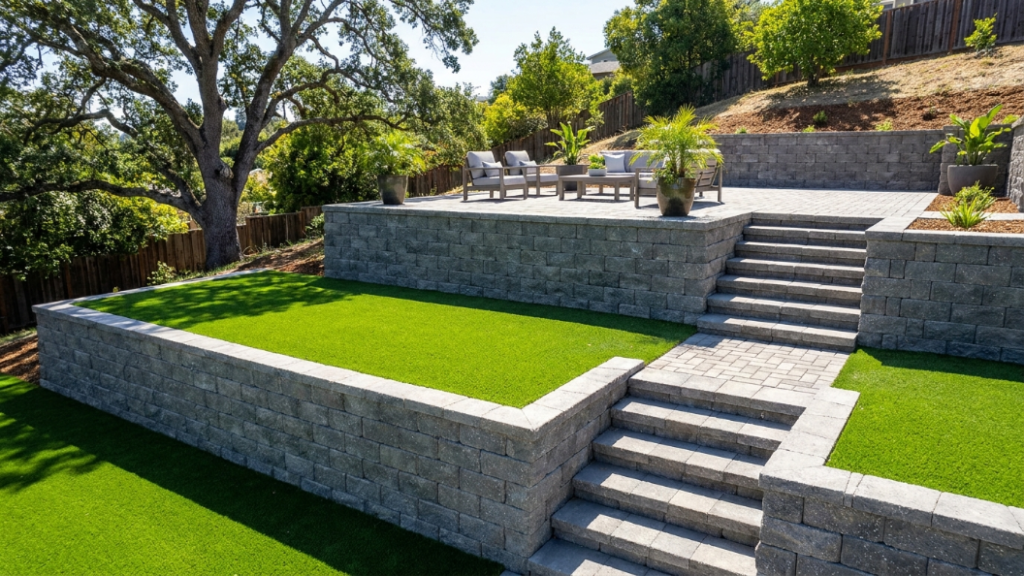
A homeowner in Hercules had a steeply sloped backyard that was completely unusable. The kids could not play outside, and every winter, mud washed down toward the house. Legacy System Pavers designed a three-tier retaining wall system using textured concrete block, integrated a French drain along each tier, and finished the flat levels with paver patios and synthetic turf. The result was over 800 square feet of new usable space. The homeowner later told us that retaining walls transform sloped Bay Area yard living in ways they never imagined — their family now spends every weekend outside.
Case Study 2: The El Cerrito Entertainer’s Paradise
An El Cerrito couple dreamed of hosting outdoor dinners but had a yard that dropped six feet from the back door to the property line. We built a reinforced concrete block wall at the midpoint, creating an upper patio for dining and a lower level for a garden. We added outdoor lighting along the wall face and stairs. Their Google review reads: “Legacy System Pavers completely changed how we use our home. The retaining wall gave us a real backyard for the first time.”
Case Study 3: The Martinez Erosion Solution
A Martinez homeowner was losing soil every rainy season, and a neighbor’s fence was beginning to lean from the pressure. We installed a natural stone retaining wall along the property line with a robust drainage system. The erosion stopped immediately, the neighbor’s fence was stabilized, and the client gained a beautiful stone feature that increased their curb appeal. Read more homeowner experiences on our reviews page.
Retaining Wall Design Ideas for Bay Area Yards
Looking for inspiration? Here are popular design approaches that show how retaining walls transform sloped Bay Area yard spaces with style.
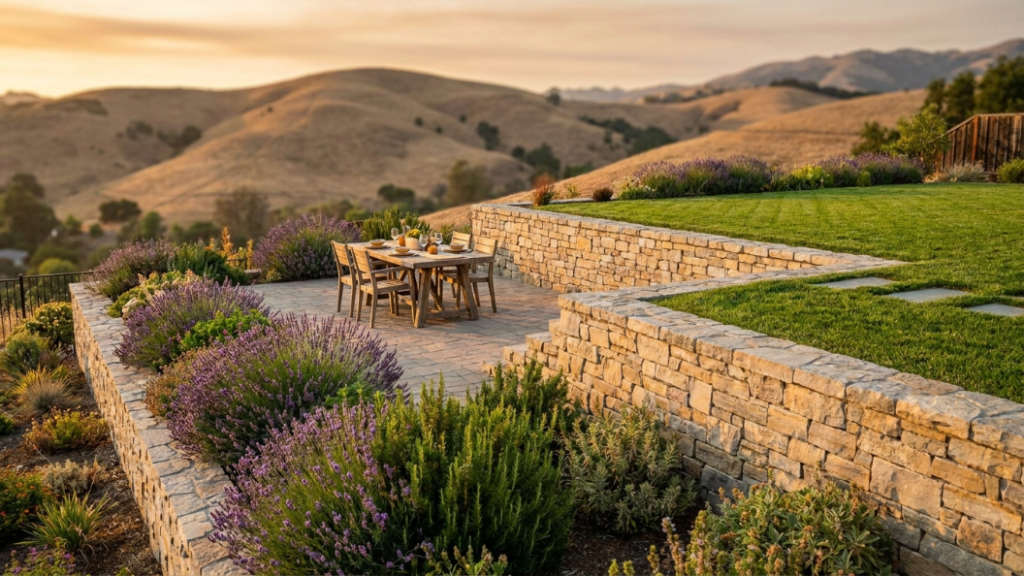
Terraced Garden Walls
Multiple low walls stepping up the hillside create planting beds at each level. This approach works beautifully with native Bay Area plants like lavender, rosemary, ceanothus, and ornamental grasses.
Seat Walls with Built-In Benches
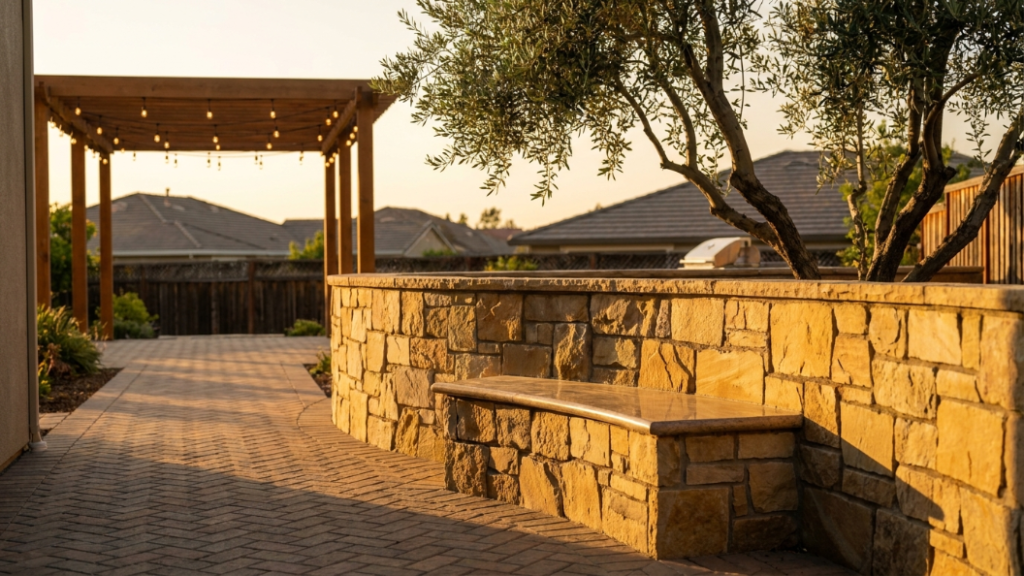
A retaining wall at sitting height (18–20 inches) doubles as perimeter seating for a patio or fire pit area. Add a smooth stone cap for comfort and you have built-in furniture that never needs to be moved or stored.
Modern Poured Concrete with Clean Lines
For contemporary Bay Area homes, a smooth poured concrete wall with a board-form texture creates a striking architectural statement. Pair it with minimalist landscaping and LED strip lighting for a sleek look.
Curved Walls with Natural Stone
Not every retaining wall needs to be straight. Curved walls follow the natural contour of a hillside and create organic, flowing outdoor spaces. Natural stone enhances this effect and blends seamlessly with the surrounding landscape.
Visit our gallery to see completed retaining wall projects across the Bay Area.
Frequently Asked Questions About Retaining Walls in the Bay Area
How tall can a retaining wall be without a permit in the Bay Area?
Most Bay Area cities allow retaining walls up to 30 inches (2.5 feet) without a building permit, though some jurisdictions set the limit at 4 feet. However, if the wall supports a surcharge (like a driveway, patio, or slope above), a permit and engineered plans may be required regardless of height. Always check with your local building department or ask your contractor.
How long do retaining walls last in Bay Area soil conditions?
A properly built concrete block or natural stone retaining wall with adequate drainage will last 50 to 75 years or more in Bay Area conditions. Timber walls have a much shorter lifespan of 10 to 20 years, especially in areas with higher moisture. The key is correct drainage installation and professional construction.
Do retaining walls help with Bay Area earthquake safety?
Retaining walls are designed for lateral earth pressure, not seismic forces directly. However, a well-engineered retaining wall with proper footing and reinforcement performs significantly better during seismic events than an unsupported slope. Bay Area building codes account for seismic loads in engineered retaining wall designs.
Can I build a retaining wall on my property line?
Property line walls are common but require careful attention to setback rules, easements, and neighbor agreements. In many Bay Area cities, you must keep the wall and its footing entirely on your property. Some projects require a boundary survey. Your contractor should clarify these requirements before construction begins.
What is the best time of year to build a retaining wall in the Bay Area?
The ideal window is late spring through early fall, roughly April through October, when the ground is dry and workable. Building during the rainy season (November through March) is possible but can cause delays and complicate excavation. Planning your project in winter for a spring start is the smartest approach.
Why Bay Area Homeowners Trust Legacy System Pavers for Retaining Walls
When retaining walls transform sloped Bay Area yard properties, the contractor behind the project makes all the difference. Legacy System Pavers is a licensed, insured hardscaping company based in Hercules, CA, serving homeowners throughout Contra Costa County, Alameda County, and the greater Bay Area. We specialize in retaining walls, patio pavers, driveway pavers, and complete outdoor living design.
Here is what sets us apart:
- California Contractor License #1127266 — fully licensed and insured.
- Deep knowledge of Bay Area soil conditions, drainage challenges, and permit requirements.
- A portfolio of completed retaining wall projects you can view in our gallery.
- Transparent pricing with free on-site estimates.
- Five-star reviews from real Bay Area homeowners — see them on our reviews page.
Learn more about our story and team on our about page, or see all the areas we serve across the Bay Area.
Conclusion: Transform Your Sloped Yard into the Outdoor Space You Deserve
A sloped yard does not have to be a problem. As this guide has shown, retaining walls transform sloped Bay Area yard spaces into functional patios, terraced gardens, entertainment zones, and property value boosters. The right materials, professional engineering, proper drainage, and an experienced local contractor are the ingredients for a successful project that lasts decades.
Whether you are dealing with erosion, dreaming of a flat patio, or simply want to unlock the full potential of your hillside lot, the path forward starts with a conversation.
Ready to see how retaining walls transform sloped Bay Area yard spaces on your property? Contact Legacy System Pavers today for a free consultation and estimate.
Phone: +1 925-666-3008 Email: info@legacysystempavers.com Hours: Monday – Saturday, 9am – 5pm Address: Hercules, CA 94547
Follow us on Facebook and Instagram for project updates, design inspiration, and Bay Area outdoor living tips.


